
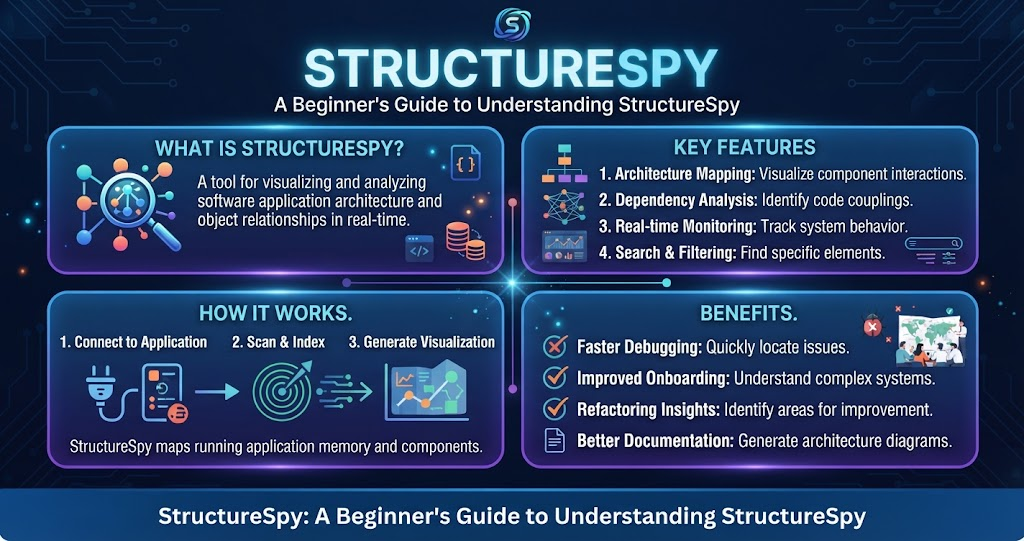
StructureSpy: A Beginner’s Guide to Understanding StructureSpy
Introduction
Learning about StructureSpy can feel confusing when you first encounter the term. However, understanding its purpose becomes much easier with clear explanations and practical examples. Whether you are exploring technical resources, analyzing structured information, or simply expanding your knowledge, StructureSpy offers valuable insights for beginners and intermediate learners. This guide explains the basics, highlights its importance, outlines practical steps, and discusses benefits, risks, mistakes, and expert advice. By the end, you will feel more confident using StructureSpy effectively in everyday situations.
What is StructureSpy?
StructureSpy is a concept or tool used to inspect, understand, and analyze structured information in an organized manner. It helps users identify patterns, relationships, and important details that may otherwise remain hidden. Depending on the context, StructureSpy can support learning, troubleshooting, research, or data organization. Beginners appreciate its ability to simplify complex structures, while experienced users value its efficiency when handling detailed information.
Why is StructureSpy important?
Understanding StructureSpy is important because organized information leads to better decisions and faster problem solving. Instead of guessing how something is arranged, users can examine its structure carefully before making changes. This approach reduces mistakes, improves accuracy, and saves valuable time. Whether working on personal projects, educational tasks, or professional responsibilities, StructureSpy encourages a systematic process that supports better outcomes and stronger understanding.
Step-by-Step Guide
Step 1: Define Your Goal
Decide what you want to analyze before starting. A clear objective makes the process more focused and productive.
Step 2: Gather Information
Collect all relevant files, records, or resources. Complete information helps StructureSpy reveal meaningful patterns and relationships.
Step 3: Review the Structure
Examine how elements connect with each other. Look for categories, sequences, hierarchies, or repeating formats.
Step 4: Record Observations
Write down important findings as you work. Organized notes make future reviews easier and reduce confusion.
Step 5: Apply Improvements
Use your observations to improve organization, fix issues, or strengthen understanding. Review the results and refine your approach when necessary.
Benefits
- Makes complex information easier to understand.
- Improves organization and workflow efficiency.
- Supports accurate analysis and better decisions.
- Helps identify hidden patterns quickly.
- Reduces unnecessary errors during reviews.
- Encourages consistent learning and documentation.
- Useful for beginners and experienced users alike.
Risks or Disadvantages
- Initial learning may require patience.
- Misinterpreting structures can produce incorrect conclusions.
- Overanalyzing simple information may waste time.
- Poor documentation can reduce effectiveness.
- Relying only on StructureSpy without critical thinking may limit broader understanding.
Common Mistakes to Avoid
Many beginners rush through the review process without defining clear goals. Others ignore small details that later become important. Skipping documentation is another frequent mistake because forgotten observations reduce future efficiency. Some users also expect instant results instead of practicing consistently. Finally, avoid depending entirely on StructureSpy without comparing findings against practical experience or reliable information. Balanced evaluation always produces stronger and more trustworthy conclusions.
FAQs
1. Who should use StructureSpy?
Anyone interested in understanding organized information, including students, professionals, and curious beginners.
2. Is StructureSpy difficult to learn?
No. With regular practice and a step-by-step approach, most users become comfortable quickly.
3. Can StructureSpy improve accuracy?
Yes. Careful analysis often reduces mistakes and improves confidence in decisions.
4. Does StructureSpy work for different projects?
Yes. It can support learning, research, planning, organization, and problem solving across many situations.
5. How often should I use StructureSpy?
Use it whenever understanding structure can improve clarity, accuracy, or efficiency.
Expert Tips
Start with small examples before tackling complex material. Practice regularly instead of relying on occasional sessions. Keep organized notes to track progress and compare results over time. Review your findings from different perspectives to discover overlooked details. Combine StructureSpy with logical thinking, careful observation, and continuous learning for the best long-term results. Consistency matters more than speed, and gradual improvement often delivers the strongest outcomes for lasting success.
Conclusion
Understanding StructureSpy does not require advanced expertise. By following a structured process, defining clear goals, reviewing information carefully, and avoiding common mistakes, anyone can build practical skills over time. The benefits include better organization, improved accuracy, and increased confidence when analyzing structured information. Although there are challenges, steady practice and thoughtful evaluation make the learning process rewarding. Continue exploring, apply these techniques consistently, and let StructureSpy become a valuable part of your personal or professional toolkit for future growth and success.
SEO Meta Title: StructureSpy Guide for Beginners and Practical Insights
SEO Meta Description: Learn what StructureSpy is, why it matters, key benefits, risks, practical steps, FAQs, and expert tips in this beginner-friendly guide.
StructureSpy: A Beginner’s Guide to Understanding StructureSpy
Introduction
Learning about StructureSpy can feel confusing when you first encounter the term. However, understanding its purpose becomes much easier with clear explanations and practical examples. Whether you are exploring technical resources, analyzing structured information, or simply expanding your knowledge, StructureSpy offers valuable insights for beginners and intermediate learners. This guide explains the basics, highlights its importance, outlines practical steps, and discusses benefits, risks, mistakes, and expert advice. By the end, you will feel more confident using StructureSpy effectively in everyday situations.
What is StructureSpy?
StructureSpy is a concept or tool used to inspect, understand, and analyze structured information in an organized manner. It helps users identify patterns, relationships, and important details that may otherwise remain hidden. Depending on the context, StructureSpy can support learning, troubleshooting, research, or data organization. Beginners appreciate its ability to simplify complex structures, while experienced users value its efficiency when handling detailed information.
Why is StructureSpy important?
Understanding StructureSpy is important because organized information leads to better decisions and faster problem solving. Instead of guessing how something is arranged, users can examine its structure carefully before making changes. This approach reduces mistakes, improves accuracy, and saves valuable time. Whether working on personal projects, educational tasks, or professional responsibilities, StructureSpy encourages a systematic process that supports better outcomes and stronger understanding.
Step-by-Step Guide
Step 1: Define Your Goal
Decide what you want to analyze before starting. A clear objective makes the process more focused and productive.
Step 2: Gather Information
Collect all relevant files, records, or resources. Complete information helps StructureSpy reveal meaningful patterns and relationships.
Step 3: Review the Structure
Examine how elements connect with each other. Look for categories, sequences, hierarchies, or repeating formats.
Step 4: Record Observations
Write down important findings as you work. Organized notes make future reviews easier and reduce confusion.
Step 5: Apply Improvements
Use your observations to improve organization, fix issues, or strengthen understanding. Review the results and refine your approach when necessary.
Benefits
- Makes complex information easier to understand.
- Improves organization and workflow efficiency.
- Supports accurate analysis and better decisions.
- Helps identify hidden patterns quickly.
- Reduces unnecessary errors during reviews.
- Encourages consistent learning and documentation.
- Useful for beginners and experienced users alike.
Risks or Disadvantages
- Initial learning may require patience.
- Misinterpreting structures can produce incorrect conclusions.
- Overanalyzing simple information may waste time.
- Poor documentation can reduce effectiveness.
- Relying only on StructureSpy without critical thinking may limit broader understanding.
Common Mistakes to Avoid
Many beginners rush through the review process without defining clear goals. Others ignore small details that later become important. Skipping documentation is another frequent mistake because forgotten observations reduce future efficiency. Some users also expect instant results instead of practicing consistently. Finally, avoid depending entirely on StructureSpy without comparing findings against practical experience or reliable information. Balanced evaluation always produces stronger and more trustworthy conclusions.
FAQs
1. Who should use StructureSpy?
Anyone interested in understanding organized information, including students, professionals, and curious beginners.
2. Is StructureSpy difficult to learn?
No. With regular practice and a step-by-step approach, most users become comfortable quickly.
3. Can StructureSpy improve accuracy?
Yes. Careful analysis often reduces mistakes and improves confidence in decisions.
4. Does StructureSpy work for different projects?
Yes. It can support learning, research, planning, organization, and problem solving across many situations.
5. How often should I use StructureSpy?
Use it whenever understanding structure can improve clarity, accuracy, or efficiency.
Expert Tips
Start with small examples before tackling complex material. Practice regularly instead of relying on occasional sessions. Keep organized notes to track progress and compare results over time. Review your findings from different perspectives to discover overlooked details. Combine StructureSpy with logical thinking, careful observation, and continuous learning for the best long-term results. Consistency matters more than speed, and gradual improvement often delivers the strongest outcomes for lasting success.
Conclusion
Understanding StructureSpy does not require advanced expertise. By following a structured process, defining clear goals, reviewing information carefully, and avoiding common mistakes, anyone can build practical skills over time. The benefits include better organization, improved accuracy, and increased confidence when analyzing structured information. Although there are challenges, steady practice and thoughtful evaluation make the learning process rewarding. Continue exploring, apply these techniques consistently, and let StructureSpy become a valuable part of your personal or professional toolkit for future growth and success.
SEO Meta Title: StructureSpy Guide for Beginners and Practical Insights
SEO Meta Description: Learn what StructureSpy is, why it matters, key benefits, risks, practical steps, FAQs, and expert tips in this beginner-friendly guide.


