
Beyond the Glow: A Technical Guide to Matching LED Strips with Stable Power Architectures
The shift toward LED technology has transformed how we illuminate architectural spaces, industrial facilities, and residential interiors. However, the visual appeal of a vibrant light installation often overshadows the complex electrical engineering required to keep it running. Achieving a seamless glow is not merely about sticking a flexible circuit to a surface; it is about the synergy between the light source and the current that feeds it. To build a system that lasts, one must look past the brightness and focus on the technical integrity of the hardware.
The Hidden Engine of Modern Lighting
At its core, an LED system is a finely tuned electrical circuit. When you look at high-performance installations, the success of the project usually begins with the choices made by a led strip lights manufacturer regarding PCB design and diode selection. These manufacturers must account for thermal management and copper weight to ensure that electricity flows evenly across the entire length of the strip. Without this foundational quality, even the most expensive power source cannot prevent issues like voltage drop where the beginning of a light run is significantly brighter than the end.
Understanding the underlying hardware means recognizing that LEDs are sensitive semiconductors. They do not behave like traditional incandescent bulbs; they require precise regulation. This is why the relationship between the strip and its driver is the most critical “handshake” in any lighting design.
The Engineering of the Strip
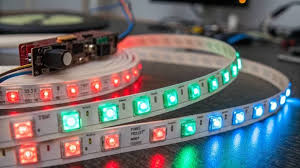
Modern LED strips are masterpieces of miniaturization. High-grade versions utilize thick, multi-layer PCBs (Printed Circuit Boards) that act as a heat sink, drawing warmth away from the diodes. This thermal regulation is vital because heat is the primary enemy of LED longevity. If a strip is designed with poor heat dissipation, the phosphorus coating on the LEDs will degrade rapidly, leading to color shifting and premature failure.
Furthermore, the density of the diodes and how many LEDs are packed into a single meter dictates not only the smoothness of the light but also the electrical demand. Higher density requires more robust conductive paths to handle the increased current without overheating the flexible substrate.
Navigating Power Architectures
If the LED strip is the body of the system, the power supply is the heart. Selecting the right driver involves more than just matching voltage. Professionals must decide between constant voltage and constant current architectures. Most flexible strips operate on constant voltage (usually 12V or 24V), which allows for the strip to be cut at specific intervals without disrupting the electrical balance of the remaining segments.
When sourcing components, engaging with reputable LED Power Supply suppliers becomes essential for securing hardware that offers “clean” power. Electrical noise and ripples in the current can cause micro-flickering, which might not be visible to the naked eye but can cause eye strain or show up as strobing on camera. A high-quality power supply filters these inconsistencies, providing a steady stream of energy that protects the delicate diodes on the strip.
The 80% Rule and Long-Term Stability
One of the most common mistakes in lighting integration is maxing out the power supply’s capacity. If a strip draws 80 watts, using a 100-watt driver is considered the industry standard. This “80% Rule” provides a necessary buffer for the power supply to operate without excessive heat buildup. Operating at the edge of a driver’s capacity leads to inefficiency and drastically reduces the lifespan of the internal capacitors.
Environmental factors also play a role. An indoor office setup has vastly different requirements than an outdoor signage project. For the latter, the power supply must be housed in an enclosure that handles moisture and dust (often rated IP65 or higher) while still allowing for adequate ventilation.
Achieving System Integrity
The final bridge between these two components is the dimming protocol. Whether using Pulse Width Modulation (PWM) or 0-10V dimming, the power supply must be compatible with the control system to ensure smooth transitions. Poorly matched components often result in “pop-on” or “dead spots” at the lower end of the dimming range, where the lights flicker or drop out entirely before reaching the desired darkness.
Ultimately, a sustainable lighting installation is the result of viewing the light strip and its power source as a single, unified system. By focusing on technical specifications such as wattage overhead, PCB thickness, and certification standards like UL or CE designers and engineers can create environments that are not only beautiful but electrically sound. When technical integrity is prioritized over promotional shortcuts, the result is a lighting solution that performs reliably for years, maintaining its color accuracy and brightness from the first hour to the fifty-thousandth.