
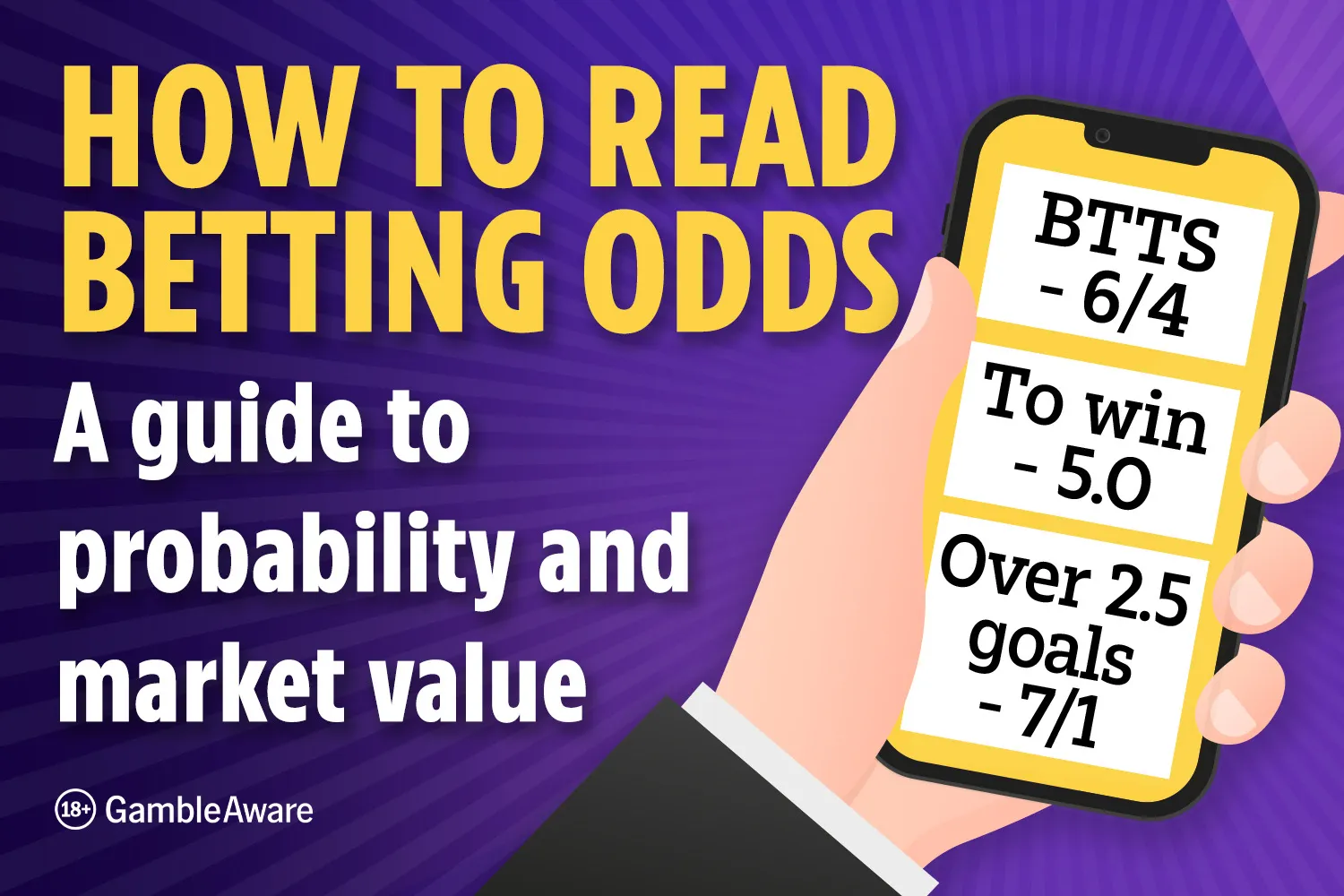
Bookmaker Odds Guide – How to Read and Use Odds
Understanding how to read and utilize bookmaker odds is a fundamental skill for anyone interested in sports betting or gambling. With a solid kèo nhà cái Bookmaker Odds Guide – How to Read and Use Odds, bettors can make more informed decisions, maximize profits, and reduce risks. This guide aims to unlock the secrets behind odds, illustrate how to interpret them accurately, and demonstrate practical ways to leverage this knowledge for better betting outcomes.
Knowing how to interpret betting odds will significantly improve your confidence and strategic approach. Whether you’re a casual bettor or a seasoned professional, mastering these concepts transforms betting from mere guesswork into a calculated game of chance and skill.
Demystifying the Types of Bookmaker Odds – A Foundation for Successful Betting
Before diving into strategies, it’s crucial to understand the primary formats in which bookmaker odds are presented. Different regions and sportsbooks utilize varying formats, each offering a distinct way to express potential payouts and risks. Grasping these formats forms the basis of effectively reading and using odds.
The three predominant formats are Decimal Odds, Fractional Odds, and American Odds. Each format has its nuances, advantages, and typical use cases. Recognizing the differences allows bettors to switch seamlessly between systems and interpret odds with clarity, regardless of where they are betting.
Decimal Odds – The Simplicity of Multiplication
Decimal odds are widely used, especially in Europe, Australia, and Canada. They represent the total payout a bettor receives per unit staked, including the original stake.
Decimal odds are straightforward: they tell you exactly how much you stand to win per unit risked. For example, decimal odds of 2.50 imply that for every $1 wagered, you’ll receive $2.50 in total, which includes your stake.
This format is praised for its simplicity and transparency. When you encounter decimal odds, simply multiply your stake by the odds to find your potential payout. The key to using decimal odds effectively is understanding that the decimal number encompasses both your initial stake and the profit.
Fractional Odds – Traditional and Precise
Fractional odds are most common in the UK and Ireland. They are expressed as fractions, such as 5/1 or 10/3, indicating the potential profit relative to the stake.
Interpreting fractional odds involves understanding that the numerator (top number) indicates the profit, while the denominator (bottom number) shows the stake needed to make that profit. For example, 5/1 means that for every $1 you bet, you will profit $5 if your bet wins.
Fractional odds tend to be more intuitive for experienced bettors who accustomed to the elegant simplicity of ratios. These odds are ideal for understanding the potential relative gains of a wager but require a slight mental calculation to determine total returns (profit + original stake).
American Odds – The Favorite and Underdog System
American odds are expressed either as positive or negative numbers, such as +150 or -200. This system indicates how much you need to stake to win $100 (negative odds) or how much you win if you stake $100 (positive odds).
Positive odds (+150) mean you will win $150 profit on a $100 wager, with total payout of $250. Negative odds (-200) indicate you must wager $200 to win $100 in profit, totaling $300 in payout.
American odds are very popular in the United States due to their procedural familiarity and straightforward risk assessment. Understanding whether the odds signify a favorite or an underdog helps bettors determine their risk-to-reward ratio effectively.
Strategies to Read and Use Odds – Turning Numbers into Profitable Actions
Once familiar with the types and meanings of odds, the next phase involves applying this knowledge to develop effective betting strategies. Knowing how to interpret odds enables bettors to identify value bets, calculate potential returns, and manage their bankroll responsibly.
The core idea behind using odds is to evaluate whether they represent a fair market or an opportunity for value. A good bettor learns to spot discrepancies between the offered odds and their own analysis of the event.
Recognizing Value Bets – The Heart of Successful Betting
Value betting involves identifying opportunities where the odds offered by the bookmaker are higher than the bettor’s calculated probability of the event occurring. This skill hinges on your ability to read and use odds in the context of your assessment.
Start by converting odds into implied probabilities. For decimal odds, divide 100 by the decimal (e.g., 2.50 → 1/2.50 = 0.40 or 40%). For fractional odds, divide the denominator by the sum of numerator and denominator (e.g., 5/1: 1 / (5+1) = 0.1667 or 16.67%). For American odds, positive figures are divided into 100 (e.g., +150: 100 / (150+100) ≈ 0.40 or 40%), negative odds require a different approach.
Compare these implied probabilities against your own estimates of the event’s likelihood. When your probability exceeds the implied market probability, you have identified a potential value bet worth pursuing.
Calculating Returns and Managing Risk
Mastering how to read and use odds extends beyond simple comprehension. It involves mathematical calculation to determine potential payout and risk management strategies. Use the odds to forecast your expected return and assess whether a wager aligns with your risk appetite.
For example, if the odds suggest a 40% chance of winning, and your analysis indicates a 50% likelihood, this presents a positive expected value. This scenario signals a profitable betting opportunity over the long term. It’s also essential to pair odds interpretation with sound bankroll management, staking only what you can afford to lose.
The key to successful betting is balancing the allure of high odds with realistic probability assessments. By systematically evaluating potential outcomes and odds data, you minimize losses during unfavorable streaks and maximize gains when opportunities arise.
Comparing Odds Across Platforms and Markets
Another critical aspect of using odds effectively is comparing offered lines across different sportsbooks. Bookmakers often set slightly varying odds to attract different bettors, leading to arbitrage or value opportunities.
By comparing odds, you can ensure you’re getting the best possible payout for your wager. This practice requires familiarity with different formats and an understanding of how small line differences can impact your overall profitability.
Over time, diligent comparison and analysis can reveal hidden opportunities, especially when bettors utilize odds conversion tools or odds comparison websites. This Competitive edge increases your ability to leverage every betting opportunity smartly.
Essential Advice for Novice and Experienced Bettors Alike – Making the Most of Your Bookmaker Odds Guide
In the world of betting, knowledge is power. From understanding odds formats to developing strategies for reading and using odds, informed bettors consistently outperform those who rely on luck or intuition alone.
Start by investing time in familiarizing yourself with the various odds presentations. Practice converting odds into implied probabilities and assessing whether a wager offers value. Use tools, calculators, and comparison sites to hone your skills and refine your strategy.
Remember, no matter how promising an odds line looks, always consider the broader context, such as team form, injuries, and other variables beyond numbers alone. Disregarding factors outside of odds can lead to costly misjudgments. The Bookmaker Odds Guide – How to Read and Use Odds is designed to empower you with mathematical clarity and strategic confidence, turning raw numbers into a competitive advantage.
Conclusion
Mastering the art of reading and using bookmaker odds is crucial for any serious bettor aiming to gain a consistent edge. Different odds formats—decimal, fractional, and American—offer various ways to interpret potential rewards and risks. Developing the ability to convert these odds into implied probabilities for comparison against your own assessments allows you to identify value bets and optimize your betting strategy. By allocating your bankroll wisely and comparing odds across multiple platforms, you increase your chances of long-term profitability. As with any skill, practice, ongoing learning, and critical analysis are the keys to transforming your betting from guesswork into a disciplined pursuit of strategic gains. The Bookmaker Odds Guide – How to Read and Use Odds provides the essential framework to elevate your betting game and turn odds into opportunities.


